For both candidates and employers, personality fit can be the deciding factor for long-term success at work. Personality tests not only help individuals gain deeper self-understanding but also foster alignment and high efficiency in the workplace.
Hogan Code Test
The Hogan Code Test is an assessment developed by Hogan Assessments to measure an individual's values, motivations, and behavioral styles in the workplace. This test helps evaluate strengths and weaknesses that may impact job performance and leadership potential. It is widely used in career guidance practices in many countries and is highly regarded by many experts.
Key Components of the Hogan Code Test
- Hogan Personality Inventory (HPI): Assesses positive personality traits such as learning ability, professionalism, cooperation, and creative thinking. HPI helps determine whether a candidate is likely to succeed in a specific job.
- Hogan Development Survey (HDS): Evaluates factors that may pose risks or limitations in a career, such as perfectionism, excessive caution, or a tendency to stand out but easily cause conflict. These factors help businesses identify weaknesses to develop appropriate management strategies.
- Motives, Values, Preferences Inventory (MVPI): Identifies personal motivations and values. This helps organizations understand what drives employees to perform better and how they prioritize personal values, thereby creating a compatible work environment.
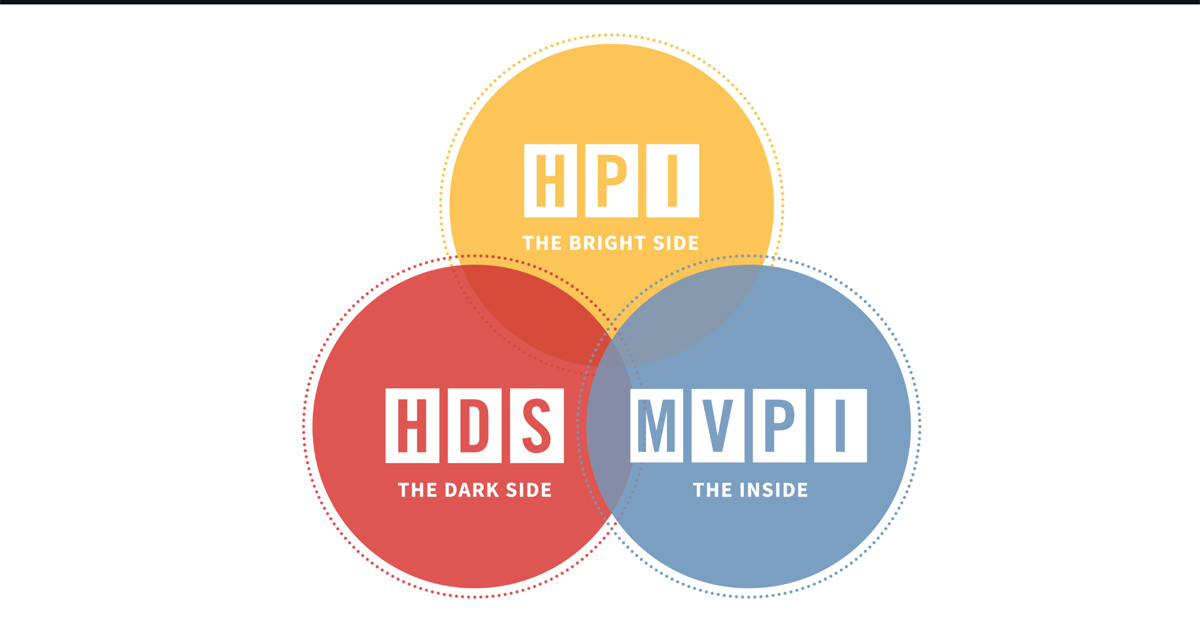
Unlock your potential with the Hogan Code Test – a useful tool for career selection and recruitment
MBTI
MBTI (Myers-Briggs Type Indicator) is one of the most popular personality tests, developed based on the psychological theory of Carl Jung, a Swiss psychiatrist. Later, scientists Katharine Cook Briggs and Isabel Briggs Myers completed the MBTI in 1962.
Not only does it help individuals gain deeper self-understanding, MBTI also shapes how people perceive and make decisions in various situations, thereby improving communication and connection with others. Based on Carl Jung's theoretical foundation, MBTI classifies personality according to four pairs of opposing traits:
- Extraversion and Introversion: Determines whether you tend to draw energy from the external world (extraversion) or from your inner thoughts and feelings (introversion).
- Sensing and Intuition: Reflects how you receive information. Sensing types (S) usually prefer concrete and practical details, while intuitive types (N) tend to focus on big ideas and creativity.
- Thinking and Feeling: Shows how you make decisions. Thinking types (T) are often logical, analytical, and objective, while feeling types (F) prioritize values, emotions, and relationships when making decisions.
- Judging and Perceiving: Assesses lifestyle and how you handle daily life. Judging types (J) prefer planning and organization, while perceiving types (P) are more flexible and adaptable.
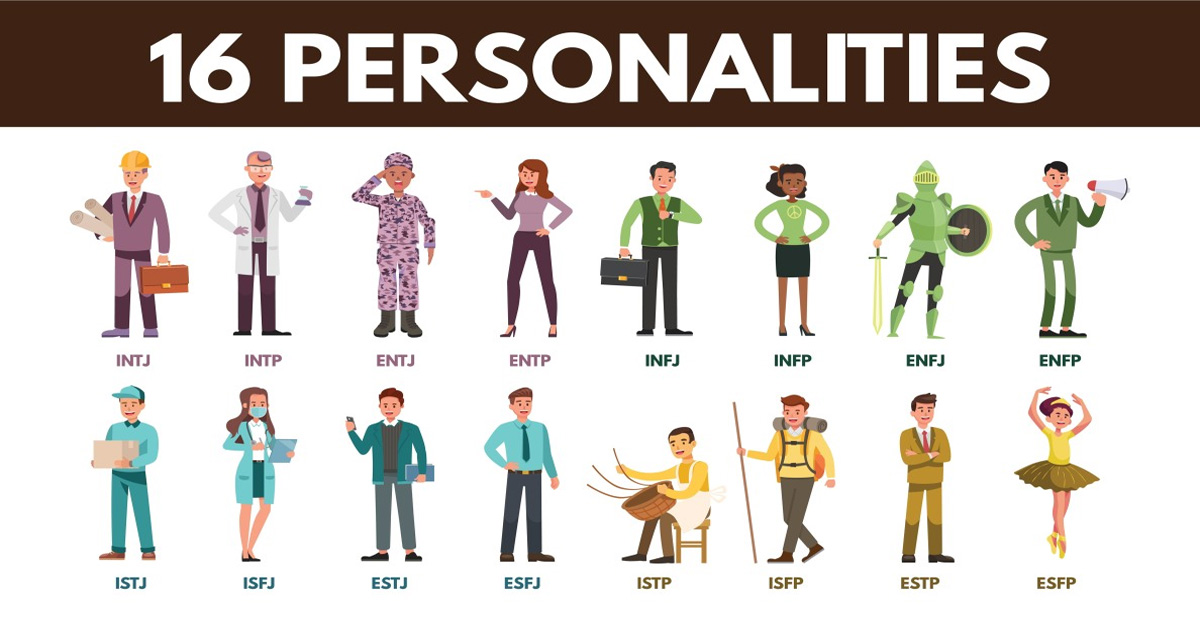
MBTI is the most popular personality test today
DISC
DISC is a personality test developed by psychologist William Moulton Marston, helping to analyze individual behavioral styles at work and in life. Businesses frequently use this test during recruitment to better understand a candidate's personality traits, strengths, and limitations. It also helps them build training processes suitable for the long-term development of the company.
DISC focuses on four factors:
- Dominance (D): Individuals with high D scores are often decisive, proactive, and strong, enjoy challenges, and have leadership abilities. They tend to make quick decisions and often take on leadership roles in projects.
- Influence (I): People with high I scores are outgoing, cheerful, and have good communication skills. They enjoy interacting with others, persuading, and influencing others' opinions.
- Steadiness (S): S types tend to be stable, persistent, and dedicated. They are reliable, value security, and often need time to adapt to major changes.
- Conscientiousness (C): Individuals with high C scores are careful, meticulous, and detail-oriented. They often make decisions based on data and adhere to standards.

DISC helps effectively analyze personality and individual behavior
Enneagram
Enneagram is a classic personality classification system based on nine different behavioral and psychological archetypes. Employers can use the Enneagram to better understand work motivation and how candidates will integrate into a team. Each personality type in the Enneagram has distinct characteristics, ways of handling emotions, and different motivations, divided into the following 09 types:
- The Perfectionist: Always strives for perfection, has a high sense of responsibility, and often sets very high standards for themselves and others.
- The Helper: Caring for others, always ready to help and support. They tend to put others' needs above their own.
- The Achiever: Always wants to succeed and be recognized. They are efficient workers and often set high goals.
- The Individualist: Seeks uniqueness and difference. They tend to be sensitive and may feel lonely.
- The Investigator: Highly curious and always eager to learn about everything. They often have broad knowledge and logical thinking.
- The Loyalist: Values loyalty and trust. They are often anxious and doubtful.
- The Enthusiast: Cheerful, optimistic, and full of life. They love exploring new things and are often energetic.
- The Challenger: Strong, independent, and tends to lead. They are often unafraid to face difficulties.
- The Peacemaker: Prioritizes peace and harmony. They often avoid conflict and tend to please others.

Discover your personality type among the 9 Enneagram types and explore your deeper motivations
Testcolor
Testcolor is a simple yet effective personality test that uses colors to identify individual personality traits and emotions. This test often asks participants to select the colors they like or feel most connected to.
The results help individuals recognize factors that influence their career decisions. For employers, using Testcolor can provide new insights into candidates, helping them better understand others' emotions and work motivations, thereby creating a more positive work environment.
Each color represents different personalities and emotional states, such as:
- Red: The color of passion and energy. People who like red are often decisive, strong, and energetic.
- Blue: Represents peace and trust. Those who love blue are usually gentle, trustworthy, and sensitive.
- Yellow: The color of creativity and happiness. People who choose yellow are often optimistic, creative, and cheerful.
- Green: Symbolizes balance and growth. Those who like green tend to be friendly, harmonious, and easygoing.
- Purple: Represents mystery and sophistication. People who love purple are often creative and deep thinkers.
- Orange: The color of enthusiasm and dynamism. Those who choose orange are usually energetic and love to explore.
In summary, personality tests play an important role in career orientation and recruitment. By leveraging deep self-understanding, candidates can find jobs that match their interests and abilities, while employers can identify the most suitable potential candidates for their company culture and job requirements.
Hopefully, this article has provided you with more knowledge to assess and select suitable candidates for your business. Combining the use of the online assessment application from NineQuiz will help you expand your opportunities to find candidates.